
Skip to content

SEO for NZ tradies

Built to be found.
Not just built.

You run the business. We handle the technical side. Every EasyPage website is set up so search engines can find it and understand what you do — from the day you publish.

  • Nothing to configure
  • No plugins to buy
  • Built for local search
  • Included on both plans
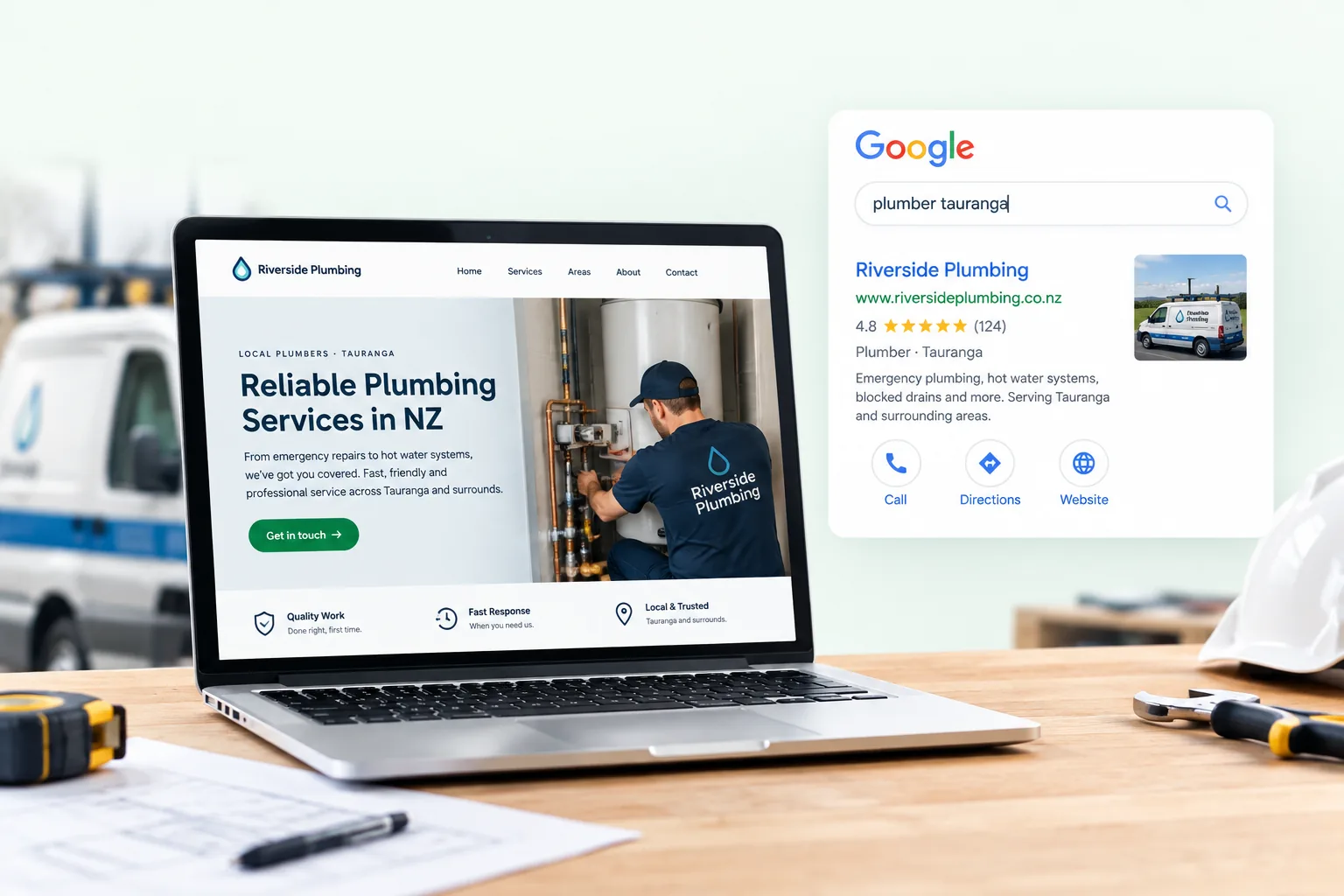
A plumbing business website open on a laptop, beside an example Google listing for the same business showing its name, website, phone and service area.
Example. The listing on the right is a Google Business Profile — free, yours, and where review stars come from.

Search engines have to work out what you do.

Somebody types “emergency plumber Tauranga”. Before a search engine can put you in front of them, it has to be sure of four things about your business. Your site answers all four in a format built for the job — not buried in a paragraph and hoped for.

  • Your trade

    Plumber

  • Your services

    Hot water, drainage, blocked pipes

  • Where you work

    Tauranga, Mount Maunganui, Papamoa

  • How to reach you

    Phone, email, quote form

What's built in

The technical side is already done.

Six things that are simply on, on every site, on both plans.

  • Structured business data

    Your trade, phone, email, address, service areas and services are published in the format search engines read — the one local results are assembled from.

  • Automatic page titles

    Every page gets its own title and description, built from what you already typed. No SEO fields to fill in and nothing to guess at.

  • A sitemap that updates itself

    Add a service, a job or an article and it is listed straight away, along with a robots file pointing search engines at it.

  • Google Search Console, in one paste

    See the words people typed before they found you. Proving you own the domain normally means a DNS job — we do that part for you.

  • Link previews that look right

    Send your site to a customer or post it in a Facebook group and your photo, business name and a line about what you do come with it.

  • Unfinished sites stay out of search

    While you are still working on it, your site turns search engines away at the door. Nothing half-written appears under your business name.

Search Console

See what people searched for.

Google Search Console is the only place that shows you the words people typed before they found you — and it is free. The part that stops most people is proving you own the domain, which means adding a DNS record.

  • Paste the code Google gives you.
  • We publish the record — that's the DNS part done.
  • The account and the data stay yours.

For domains that came with your plan. If you brought your own, you add the record where you bought it and we’ll show you how.

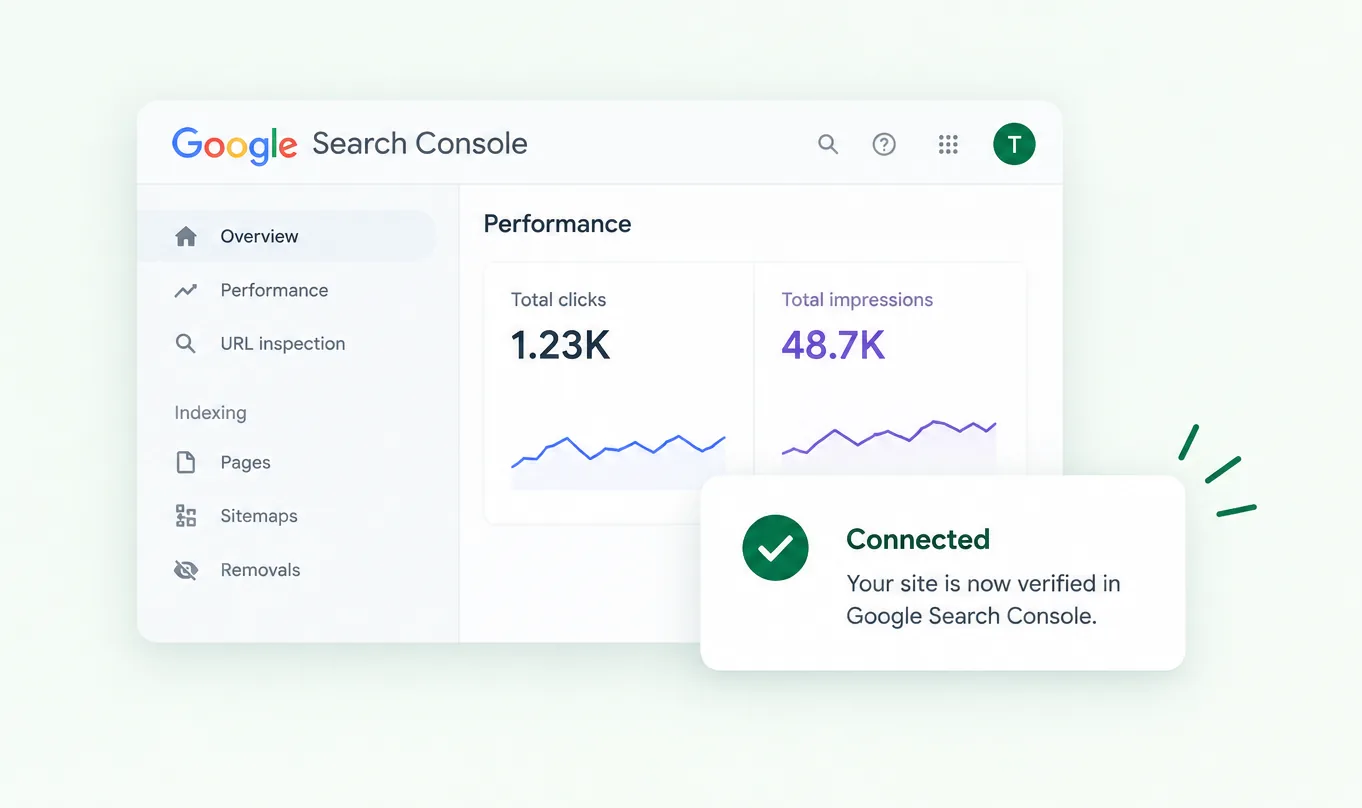
An illustration of Google Search Console showing a site verified and connected, with example click and impression figures.
Illustration. The figures shown are made up — what yours says depends entirely on your business.

How it works

From your answers to something a search engine can read.

  1. 1You fill in

    Your business details

    Trade, phone, service areas, opening blurb — the questions you answer when you build the site.

  2. 2It becomes

    Services, areas, jobs, articles

    Each one a page or a section on your site, in your own words and photos.

  3. 3We publish

    Structured data, titles, sitemap

    Generated from those answers every time the page is served, so it can never drift out of date.

  4. 4So that

    Search engines can read it

    They find every page, and they can tell what you do and where you do it without having to guess from your wording.

On your site, in every page

{
  "@type": "LocalBusiness",
  "name": "Your Business",
  "telephone": "+64 21 123 456",
  "email": "you@yourbusiness.co.nz",
  "areaServed": ["Tauranga", "Papamoa"],
  "url": "https://yourbusiness.co.nz"
}

Written from your answers each time the page is served, so it cannot drift out of date. Nothing is filled in that you did not give us — no star rating, no opening hours we had to guess at.

Your articles are treated as articles

A post about what rewiring an old villa really costs is the page most likely to be found by someone who has never heard of you. Yours is published with its title, summary and date in the format search engines expect from an article — and only with the date you gave it, because claiming every old post was written this morning is the sort of thing that counts against a site.

Read the articles on ours

One address, not two

Your site answers on the free address and on your own domain. Left alone, that is two copies of every page as far as a search engine is concerned, and whatever standing the site earns gets split between them. Yours names your own domain as the one that counts, automatically, the moment the domain starts working.

About NZ domains

What you'd otherwise do yourself

On most builders, this is your job.

None of it is difficult on its own. All of it is something nobody tells you about until it is missing.

Technical SEO tasks, on EasyPage compared with a typical website builder
What has to happenEasyPage
Structured business data (LocalBusiness)Typically: Add-on plugin, configured by youIncluded
Page titles and descriptionsTypically: Blank fields you fill in per pageIncluded
Sitemap and robots fileTypically: Plugin, or nothingIncluded
Articles marked up as articlesTypically: Plugin, or nothingIncluded
Search Console verificationTypically: A DNS record you add yourselfIncluded
Link preview image and textTypically: Set per page, usually forgottenIncluded
Drafts kept out of searchTypically: Depends how the site was set upIncluded
NZ domain and certificateTypically: Bought and renewed separatelyIncluded

Worth saying plainly

Good foundations don’t guarantee rankings.

Nobody can promise you a position in search results — not us, and not anyone charging a monthly fee to try. What a site can do is make sure nothing technical is in the way: that it can be found, read and understood, and that it is not quietly telling search engines something untrue about your business.

That is what is built in here, and it is where most trade websites fall down. Past it, the things that actually move you up are yours and mostly free: a Google Business Profile — the listing that puts you in the map results — real reviews, and pages about the work you actually do.

We will tell you the same thing if you ask us: no invented star ratings, no opening hours we had to guess at, and no number on this page that we cannot show you where it came from.

Questions

Quick answers

All common questions

01. Do I have to do anything to turn this on?

No. It is generated from the answers you have already given, every time a page is served. There is no SEO screen, no plugin to install and no add-on to buy.

02. Will this get me to the top of Google?

Nobody can promise that, and you should be wary of anyone who does. What this does is make sure nothing technical is standing in your way: your site can be found, read and understood. What moves you up from there is a Google Business Profile, reviews, and writing about the jobs you actually do.

03. What is structured data, in plain English?

A copy of your business details written in the format search engines read, rather than left for them to work out from your sentences. It is how a search engine knows Papamoa is a place you work in rather than just a word on your page.

04. Do I need to know what any of this means?

No. That is the point of it being built in. If you ever want to look under the bonnet, everything on this page is visible in your site's own source — nothing here is a setting you have to find.

You run the business. We’ll handle the technical side.

Pick a design, put your details in, publish. Everything on this page happens on its own from there. $29 + GST a month with your NZ domain included — launch price, normally $39 + GST.

An EasyPage van parked on a coastal road in New Zealand, with a ladder on the roof rack.